Chefs Torch
January 12, 2026
Yann Couvreur
January 12, 2026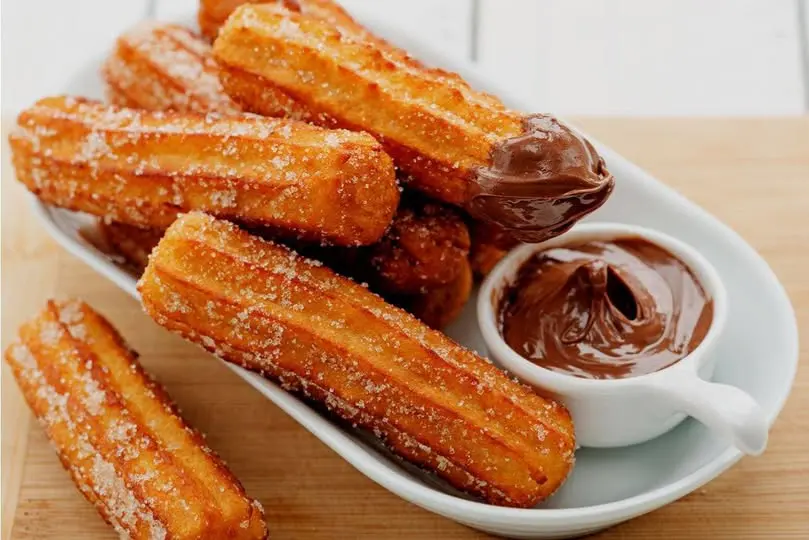
A pastry shaped by people, place, and ritual
Few pastries are as instantly recognisable as churros. Crisp on the outside, tender within, and often served warm enough to leave sugar on your fingertips, churros sit somewhere between street food and comfort ritual. They are simple, yet deeply tied to the communities that make and eat them.
As a pastry chef and food historian, what fascinates me most about churros is not their ingredients, but their endurance. Flour, water, salt, and oil do not sound like the foundation of a global favourite. Yet churros have travelled widely, adapted easily, and remained meaningful wherever they landed.
Where did churros come from?
The most commonly accepted origin places churros in Spain, though the exact moment of invention is harder to pin down.
One theory links churros to Spanish shepherds. High in the mountains, away from bakeries, they needed a bread that could be cooked over open fires. A simple dough piped into hot oil fit the conditions. The ridged shape, created by a star nozzle, helped the dough cook evenly and become crisp.
Another theory suggests influence from Chinese youtiao, a fried dough eaten for breakfast. Portuguese traders may have encountered it in China and brought the idea back to the Iberian Peninsula, where it evolved into something distinctly Spanish.
What matters more than the precise origin is that churros became embedded in daily life. By the nineteenth century, they were already part of morning routines in Spanish cities.
Why churros matter in Spanish culture
In Spain, churros are not a dessert. They are breakfast or late-night food, eaten standing at counters or gathered around café tables.
The classic pairing is churros con chocolate. Thick, almost pudding-like hot chocolate is meant for dipping, not drinking. The churro becomes a utensil as much as a pastry.
This ritual matters. Churros are shared after long nights, before workdays begin, and during festivals. They are democratic food. Cheap, filling, and available to everyone.
Their popularity comes from timing as much as taste. Churros meet people where they are: tired, celebratory, social.
How churros spread through Latin America
As Spanish influence spread, churros travelled with it. In Mexico, Central America, and much of South America, churros became a new thing.
Latin American churros are often softer and richer. Many are filled with dulce de leche, custard, or chocolate. Sugar coatings can include cinnamon or spices. The dough itself may include milk or eggs, which moves it closer to choux pastry.
Street vendors adopted churros because they are easy to make and can be sold warm. In many cities, the smell of frying dough and sugar is part of the sensory memory of markets and plazas.
What stayed constant was accessibility. Churros remained a food for everyone.
Variations across the world
As churros spread globally, they adapted to local tastes.
In the United States, churros are served at fairs and theme parks, often rolled in cinnamon sugar and drizzled with chocolate sauce. In parts of Asia, they are sometimes longer, thinner, and less sweet.
In Argentina and Uruguay, filled churros with dulce de leche are common. In Brazil, chocolate fillings are popular. In Europe outside Spain, cafés may serve them as dessert with ice cream or flavoured sauces.
These changes do not dilute the churro. They show how flexible the form is.
Dough styles and texture differences
Traditional Spanish churros are made with a simple dough of water, flour, and salt. No sugar is added to the dough itself. The sweetness comes later.
This produces a crisp shell and a slightly chewy interior. It is a savoury base paired with sweet accompaniments.
In contrast, many Latin American versions include milk, butter, or eggs. The result is softer, richer, and closer to choux pastry. These versions hold fillings better and feel more indulgent.
Neither is more authentic. They simply serve different purposes.
Shapes and tools
The ridged shape of churros is not decorative. It increases surface area, helping the dough cook evenly and crisp properly.
Star nozzles are traditional. Smooth churros tend to split or cook unevenly. The tool shapes the final texture as much as the recipe.
Long, straight churros are common in Spain. Shorter-filled churros dominate elsewhere. Some regions pipe spirals or loops, especially for festivals.
Accompaniments that define the experience
Churros rarely stand alone. What you eat them with matters.
Classic accompaniments include:
- Thick Spanish hot chocolate
- Cinnamon sugar
- Dulce de leche
- Vanilla custard
- Dark chocolate sauce
Modern pairings include ice cream, fruit compotes, and even savoury dips. Yet the most enduring accompaniments are the simplest ones.
The contrast between crisp dough and smooth dip is the point.
Why churros remain popular
Churros endure because they are honest. They are not precious. They do not pretend to be more than they are.
They are made fresh, eaten warm, and shared easily. They fit into daily life and special occasions without changing much.
In pastry terms, churros are a lesson in restraint. Technique matters more than ingredients. Timing matters more than decoration.
Making sense of churros today
In a world of complex desserts, churros remind us that pastry does not need layers or spectacle to be meaningful.
For chefs, they are a study in heat control, dough handling, and service timing. For eaters, they are comfort.
At Flux Desserts, we view pastries like churros not as trends but as living traditions. Understanding where they come from helps us respect how we make and serve them today.
Variations worth knowing
Some notable variations include:
- Porras in Spain are often thicker and softer and are eaten in Madrid.
- Filled churros in Latin America are piped after frying.
- Mini churros served as café desserts.
- Savoury churros paired with cheese or spices
Each variation reflects its place and people.
Frequently asked questions
Who invented churros?
Churros are most commonly credited to Spain, though their exact origin is debated. They likely evolved from simple fried dough traditions adapted to local needs.
Churros are most commonly credited to Spain, though their exact origin is debated. They likely evolved from simple fried dough traditions adapted to local needs.
Are churros Spanish or Mexican?
They originated in Spain and spread to Mexico and Latin America, where they evolved into new forms.
They originated in Spain and spread to Mexico and Latin America, where they evolved into new forms.
Why are Spanish churros not sweet inside?
Traditional Spanish churros rely on sugar coatings and chocolate for sweetness rather than sweet dough.
Traditional Spanish churros rely on sugar coatings and chocolate for sweetness rather than sweet dough.
What are churros con chocolate?
It is a classic Spanish pairing of fried churros with thick hot chocolate meant for dipping.
It is a classic Spanish pairing of fried churros with thick hot chocolate meant for dipping.
Are churros made from choux pastry?
Some versions resemble choux, especially those with eggs and milk, but traditional Spanish churros are simpler.
Some versions resemble choux, especially those with eggs and milk, but traditional Spanish churros are simpler.
Why do churros have ridges?
The ridges help the dough cook evenly and stay crisp.
The ridges help the dough cook evenly and stay crisp.
Can churros be made ahead of time?
They are best eaten fresh. Once cooled, they lose their texture.
They are best eaten fresh. Once cooled, they lose their texture.