Palette Knife Set
March 17, 2026
The Quiet Magic of Egg Tarts
April 4, 2026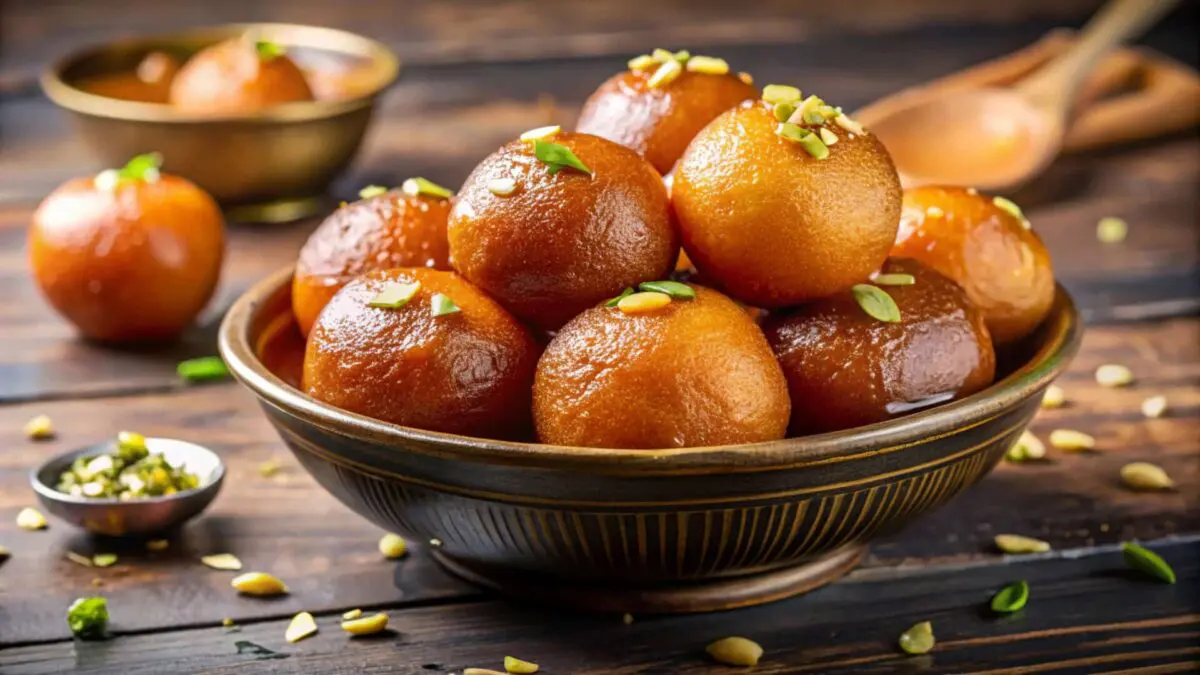
One of the most beloved sweets in India
Every culture has a dessert that feels like home. In India, that dessert is often Gulab Jamun.
Soft golden dough balls soaked in fragrant sugar syrup might sound simple, but the experience of eating them is something special. They arrive warm, glossy with syrup and scented with cardamom or rose. The outside is gently caramelised while the inside stays soft and almost creamy.
You will see Gulab Jamun at weddings, religious festivals and family celebrations. It appears in restaurants, roadside sweet shops and home kitchens. For many people, it is not just a dessert. It is a part of the celebration itself.
To understand Gulab Jamun is to understand how food travels across cultures and centuries, evolving with each generation.
The origins of Gulab Jamun
Like many traditional desserts, the exact moment Gulab Jamun was invented is difficult to pin down. Food historians generally agree that its roots lie in the royal kitchens of the Mughal Empire, which ruled large parts of the Indian subcontinent from the sixteenth century onward.
The Mughal courts were known for their rich cuisine. Persian, Central Asian and local Indian cooking traditions blended together in those kitchens. Many dishes now considered classic Indian foods emerged from this cultural meeting point.
One strong influence was a Persian dessert called “luqmat al qadi”, which consisted of small fried dough balls soaked in syrup or honey. Similar sweets existed across the Middle East and Central Asia.
Over time, cooks in the Mughal kitchens adapted these ideas using local ingredients. Instead of simple wheat dough, they began using khoya. Khoya is milk that has been slowly simmered until most of the water evaporates, leaving a dense and rich milk solid.
The result was something new. The dough balls became softer and richer. The syrup was scented with rosewater, saffron and cardamom. Eventually, the dessert became known as Gulab Jamun.
The name itself tells a story. “Gulab” means rose water. “Jamun” refers to a small, dark purple fruit from the Indian subcontinent that the dessert resembles in shape and colour after frying.
Why Gulab Jamun became so loved
The popularity of Gulab Jamun comes from a few simple qualities.
First, the texture is deeply satisfying. The dough balls are fried until golden brown, then soaked in warm sugar syrup. When done well, the syrup seeps into the centre, creating a dessert that is soft and moist without falling apart.
Second, the flavour is comforting. The syrup is usually infused with cardamom and rosewater, sometimes with saffron. These ingredients are familiar and cherished across Indian cooking.
Third, the dessert carries strong emotional meaning. Gulab Jamun is tied closely to celebration. It appears during festivals such as Diwali and Eid. It is served at weddings and family gatherings.
Because of that, many people associate the taste with joyful moments from childhood. That emotional connection keeps the dessert alive across generations.
How Gulab Jamun is traditionally made
Traditional Gulab Jamun begins with khoya. The khoya is mixed with a small amount of flour and shaped into smooth balls.
Those balls are fried slowly in ghee or oil. The heat must be controlled carefully. If the oil is too hot, the outside browns before the inside cooks. If it is too cool, the dough absorbs too much oil.
Once fried to a deep golden colour, the balls are placed in warm sugar syrup.
The syrup is usually flavoured with cardamom pods and sometimes rosewater or saffron. The balls absorb the syrup gradually, becoming soft and fragrant.
The final dessert is often served warm, sometimes with a spoonful of syrup poured over the top.
Variations across India
India is vast and diverse, and so are its desserts. Gulab Jamun appears in many regional forms.
One popular variation is Kala Jamun. In this version, the dough balls are fried longer until they become darker and slightly firmer. The flavour becomes deeper with gentle caramel notes.
Another version is called Pantua in parts of eastern India. Pantua is similar in shape but often uses chhena, a fresh cheese, rather than khoya.
Some recipes include a filling. Pistachios or almonds may be tucked into the centre of each dough ball before frying.
Each region adds its own touch while keeping the dessert’s heart the same.
How Gulab Jamun spread around the world
As Indian communities settled across the world, Gulab Jamun travelled with them.
Today you will find it in sweet shops across South Asia, the Middle East, the United Kingdom, Australia, Canada and many other countries.
In restaurants, it is often served warm with a scoop of vanilla ice cream. The contrast between the hot syrup-soaked dough and cold ice cream has become a favourite pairing.
Some chefs experiment with modern interpretations. Gulab Jamun cheesecake, Gulab Jamun ice cream and even Gulab Jamun doughnuts appear on contemporary menus.
Despite these creative twists, the classic version remains the most loved.
What Gulab Jamun teaches pastry chefs
From a pastry perspective, Gulab Jamun is a masterclass in balance.
The frying temperature must be precise. The dough must be smooth enough to cook evenly. The syrup must be fragrant but not overwhelming.
Most importantly, the syrup must penetrate the dough without turning it mushy.
These details remind pastry chefs that even the simplest desserts require care and patience.
The reward is a dessert that looks modest but delivers deep comfort.
Serving Gulab Jamun
In homes and restaurants, Gulab Jamun is often served warm in a small bowl with syrup.
Some cooks garnish it with crushed pistachios or almond slivers. A touch of saffron in the syrup adds colour and aroma.
Another common accompaniment is vanilla ice cream or kulfi, a dense Indian frozen dessert.
The combination of warm syrup-soaked pastry and cold cream is surprisingly satisfying.
Why it remains timeless
Many desserts rise and fall in popularity. Gulab Jamun has endured for centuries.
Part of the reason is its simplicity. The ingredients are humble. The technique is straightforward once learned.
But more importantly, it carries cultural meaning. It appears during celebrations, religious events and family gatherings. It marks moments of joy.
That emotional connection keeps the dessert alive, generation after generation.
For pastry chefs and curious home bakers alike, Gulab Jamun offers a beautiful reminder that some of the most meaningful desserts are also the simplest.
FAQ About Gulab Jamun
What is Gulab Jamun made from?
Traditional Gulab Jamun is made from khoya, which is reduced milk solids. The dough is shaped into balls, fried and soaked in sugar syrup flavoured with cardamom and rosewater.
Where did Gulab Jamun originate?
Most food historians trace the origins of Gulab Jamun to the Mughal Empire in India, where Persian and Central Asian cooking traditions blended with local ingredients.
Why is Gulab Jamun so popular in India?
It is strongly associated with celebrations such as weddings, festivals and family gatherings. The comforting flavour and soft texture also make it widely loved.
Is Gulab Jamun served hot or cold?
It is usually served warm with syrup. Some restaurants pair it with ice cream to create a contrast between warm and cold textures.
Are there variations of Gulab Jamun?
Yes. Popular variations include Kala Jamun, which is darker and slightly firmer, and Pantua from eastern India, which uses fresh cheese instead of khoya.
Can Gulab Jamun be made outside India?
Yes. Many cooks make it around the world using milk powder or other substitutes when khoya is difficult to find.