Gulab Jamun
March 17, 2026
Silicone Moulds
April 4, 2026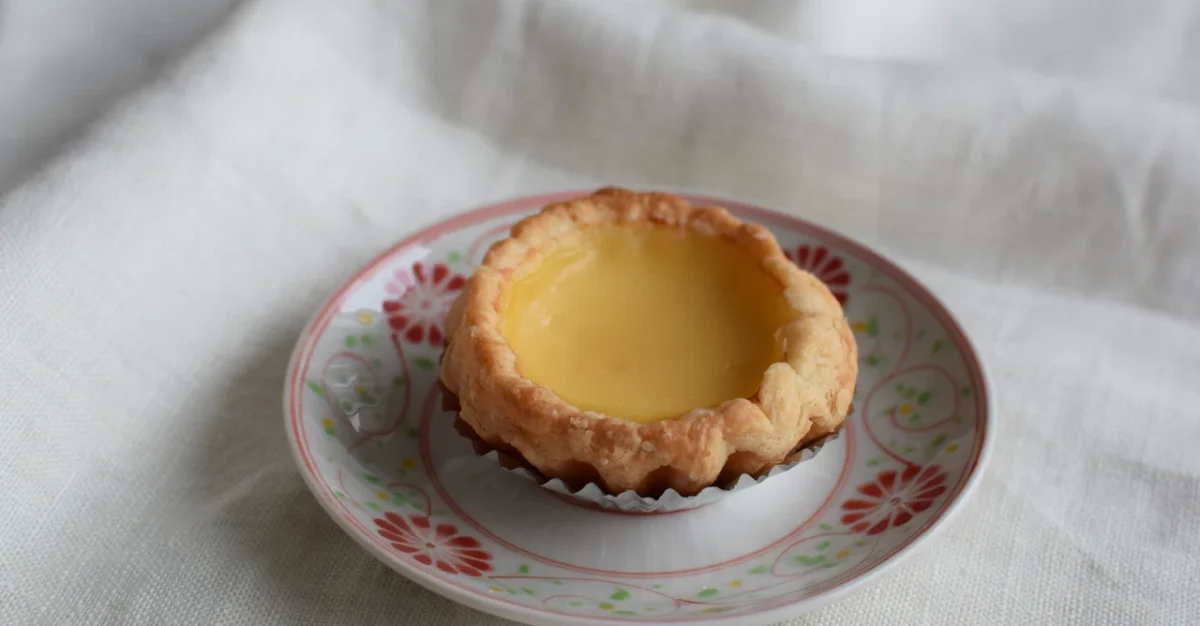
The Quiet Magic of Egg Tarts
A pastry chef’s notes on history, craft and comfort
There are desserts that impress, and then there are desserts that stay with you. Egg tarts belong to the second group. They are modest at first glance. A small pastry shell, a glossy custard, nothing more. But when made well, they hold a kind of calm perfection that is hard to forget.
At Flux Desserts, we often return to classics like this, not out of nostalgia alone, but because they teach us something about restraint, balance and memory.
Where Egg Tarts Come From
The story of egg tarts is not tied to a single kitchen or chef. It is a story of travel.
Most food historians trace the roots back to Portuguese custard tarts, known as pastéis de nata. These originated in Lisbon, created by monks in the Jerónimos Monastery before the 18th century. When Portugal established trade routes and colonies, including Macau, the recipe traveled with them.
In Macau, the tart evolved. The most widely credited figure in its modern form is Andrew Stow, a British pharmacist who opened a bakery on Coloane Island in the late 1980s. He adapted the Portuguese tart, adjusting sweetness and texture to suit local tastes. His version became iconic, with a slightly caramelised top and flaky layers.
Meanwhile, in Hong Kong, a different path unfolded. British colonial influence brought custard pies and baked desserts into local cafes. During the 1940s and 1950s, Hong Kong bakeries began producing egg tarts inspired by English custard pies but refined into something lighter and more delicate.
So while no single person can claim full ownership, egg tarts are the result of cultural exchange. Portugal, Britain, Macau and Hong Kong all left their mark.
Why They Matter So Much
Egg tarts are not just bakery items in Hong Kong and Macau. They are part of daily life.
You find them in cha chaan tengs, those casual cafes that serve everything from milk tea to baked rice. You see them in neighbourhood bakeries, stacked fresh in metal trays. People buy them in pairs or boxes, often still warm.
Their appeal is simple. The custard is smooth but not heavy. The pastry gives just enough structure without getting in the way. There is sweetness, but it does not overwhelm. It is a dessert you can eat at any time of day without feeling like you have made a big decision.
There is also comfort in consistency. Generations have grown up with the same flavour and texture. It becomes part of memory. A quick stop after school. A quiet morning with tea. A small treat shared without ceremony.
The Two Main Styles
Hong Kong Style Egg Tart
This version usually uses shortcrust pastry. The shell is firm and slightly crumbly, similar to a butter tart base but more refined. The custard is silky, pale yellow, and gently sweet.
The focus here is balance. Nothing dominates. The pastry supports the custard rather than competing with it.
Macau Style Egg Tart
This style leans closer to the Portuguese original. The pastry is laminated, more like puff pastry, with visible layers. The custard is richer and often has caramelised spots on top from higher baking temperatures.
It feels more rustic, a bit bolder, with a deeper flavour.
How Egg Tarts Travelled the World
As Hong Kong and Macau communities spread globally, egg tarts followed.
In Australia, Canada, the UK and the US, they became staples in Chinese bakeries. Each region adjusted them slightly. Some versions are sweeter to match local preferences. Others experiment with pastry, switching between shortcrust and puff depending on production style.
You also see modern adaptations. Matcha custard, chocolate fillings, even savoury interpretations. While these can be interesting, the classic version remains the benchmark.
At Flux Desserts, we respect these variations but always return to the original idea. A clean custard. A well made shell. Nothing unnecessary.
Variations Worth Knowing
- Butter crust vs puff pastry
The choice of pastry changes the entire experience. Shortcrust offers clarity and structure. Puff pastry adds richness and texture. - Sweetness level
Traditional versions are less sweet than many Western custards. This allows the egg flavour to come through. - Baked finish
Some bakers aim for a smooth surface. Others embrace caramelised spots for depth. - Mini vs large tarts
Smaller tarts are more common in Hong Kong, making them easy to share or eat on the go.
What to Eat Them With
Egg tarts rarely stand alone in their home culture.
- Milk tea
Strong, slightly tannic Hong Kong milk tea balances the sweetness perfectly. - Black coffee
A simple pairing that highlights the custard’s softness. - After dim sum
Often served at the end of a meal, when you want something light but satisfying.
A Note from the Kitchen
Making egg tarts looks simple. It is not.
The custard needs to be strained for smoothness. The baking temperature must be precise to avoid bubbles or cracking. The pastry must hold its shape without becoming tough.
There is no place to hide mistakes.
That is part of why we love them.
Try Them Fresh
If you are curious about how we approach classics like this, you can explore more on our site:
https://www.fluxdesserts.com.au/
You might also enjoy:
Final Thoughts
Egg tarts are not loud desserts. They do not need to be.
They are built on small decisions done well. Good eggs. Careful baking. Respect for texture.
Sometimes that is enough.