
Churros (Spain/Latin America)
January 12, 2026
Antonio Bachour
February 5, 2026
Quiet precision, honest flavour, modern French pastry
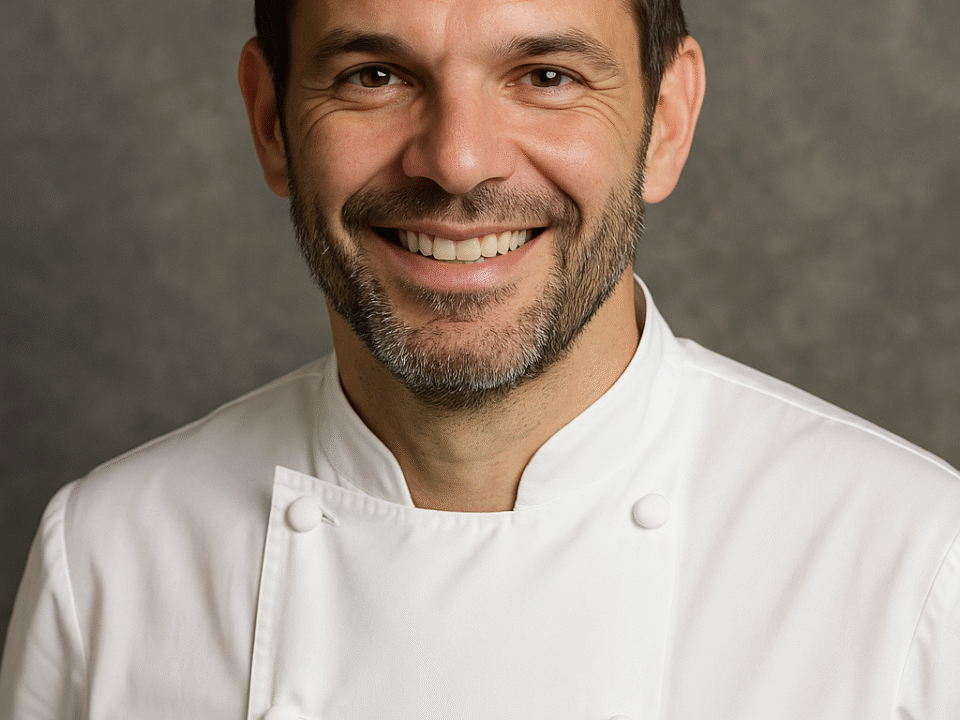
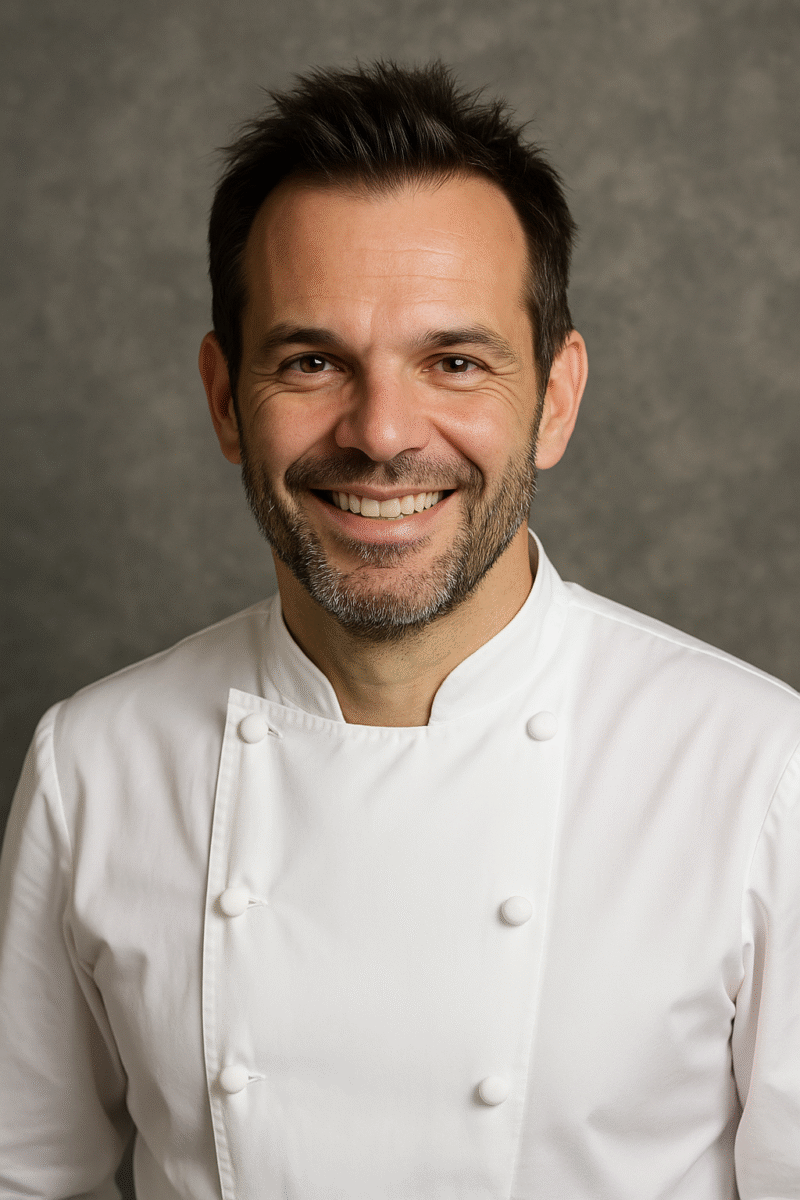
When people talk about modern French pastry, they often reach for words like ‘innovation’ or ‘reinvention’. With Yann Couvreur, the story is simpler and more interesting. His work is about restraint. About removing anything that does not serve flavour, texture, or feeling.
As a pastry chef and food historian, I see Couvreur as part of a lineage rather than a break from tradition. His desserts look contemporary, but their foundations are deeply classical. What sets him apart is his careful editing. Nothing is added for effect. Nothing is there without purpose.
Early life and beginnings
Yann Couvreur was born in France in 1980. Like many French pastry chefs of his generation, he did not set out to become famous. His path was shaped by apprenticeship, repetition, and an early respect for technique.
He trained in the traditional French system, learning through hands-on work rather than shortcuts. This grounding matters when looking at his later style. You can see the discipline in his finishes and the balance in his flavour combinations. His desserts are calm because the fundamentals are solid.
Training and professional development
Couvreur trained under some of the most respected names in French pastry and fine dining. One of the most important stages of his career was working at Le Meurice, where he served as pastry chef alongside Alain Ducasse.
This environment demands precision. Pastry at this level is not about excess. It is about consistency, clarity, and refinement day after day. Working in a palace kitchen shapes how chefs think. There is no room for chaos or ego. Everything must be controlled, repeatable, and worthy of the setting.
Before Le Meurice, Couvreur also worked at Park Hyatt Paris-Vendôme, another training ground known for exacting standards. These kitchens gave him a deep understanding of classical pastry technique and how to adapt it without losing its soul.
The decision to go independent
In 2016, Yann Couvreur opened his first pâtisserie in Paris under his own name. This was not a flashy opening filled with novelty. It was quiet, confident, and focused.
From the beginning, his shops stood out for what they did not do. No artificial colourings. No heavy sugar. No unnecessary decoration. Ingredients were seasonal, often raw or lightly transformed, and always traceable.
The now-famous fox logo became the brand’s visual signature. It reflects Couvreur’s interest in nature and instinct, as well as his preference for subtle symbolism over loud branding.
Signature creations and style
Yann Couvreur does not rely on one single signature dessert in the traditional sense. Instead, his signature is an approach.
That said, several creations are closely associated with his name.
One is his interpretation of the mille feuille. Where many versions are heavy and overly sweet, his is light, crisp, and carefully layered. The cream is restrained. The pastry shatters cleanly. It feels deliberate rather than indulgent.
Another is his work with fruit, especially citrus and berries. Fruit is treated as a central flavour, not a garnish. Acidity is allowed to remain present. Sugar supports rather than dominates.
He is also known for his desserts built around raw or lightly cooked elements. This creates a sense of freshness and immediacy. You feel like you are eating something alive rather than processed.
Texture plays a central role. Crisp, soft, creamy, and fluid elements are balanced to allow each bite to evolve. Nothing is static.
Minimalism that comes from the technique
Couvreur’s minimalist aesthetic is often misunderstood as simplicity. In reality, it is the result of complex thinking.
Removing decoration means the structure must be perfect. Flavour balance must be precise. If a dessert has only a few components, there is nowhere to hide.
This philosophy aligns closely with broader movements in contemporary French cuisine, where chefs seek clarity rather than spectacle. Couvreur applies this thinking to pastry with unusual consistency.
Approach to ingredients
One of the defining aspects of Yann Couvreur’s work is his commitment to ingredient integrity. He avoids artificial flavourings and colours, not as a marketing position, but as a technical one.
When you remove artificial aids, you must understand your ingredients deeply. You must know how fruit behaves at different stages of ripeness, how sugar affects texture, and how fats carry aroma.
This approach has influenced a generation of pastry chefs who now see restraint as a skill rather than a limitation.
Influence and legacy
Yann Couvreur’s legacy is still unfolding, but his impact is already clear.
He has helped normalise a quieter form of excellence in pastry. One where elegance comes from control, not excess. Where technique serves flavour, not ego.
Many young pastry chefs now look to his work as proof that you can build a strong identity without relying on shock or decoration. His pâtisseries have expanded internationally, but the philosophy remains consistent.
He has also contributed to a broader shift in how pastry is discussed. Less about sugar and spectacle. More about balance, texture, and respect for ingredients.
Why Yann Couvreur matters today
In a time when desserts are often designed for social media before the palate, Couvreur’s work feels grounded. His pastries ask you to slow down. To taste. To notice.
For Flux Desserts, his approach aligns closely with our belief that pastry is a craft shaped by patience, restraint, and history. Innovation does not always mean adding something new. Sometimes it means removing what does not belong.
Yann Couvreur reminds us that the most modern desserts often come from the deepest understanding of tradition.
Final thoughts
Yann Couvreur did not invent pastry. He refined how we listen to it.
His work shows that minimalism is not about doing less. It is about doing only what matters. In a field where it is easy to hide behind sugar and decoration, his clarity stands out.
For pastry chefs, students, and curious eaters alike, his legacy is an invitation. Learn the rules. Respect the ingredients. Then choose carefully what to leave out.
That quiet discipline is where his true influence lies.