Silicone Moulds
April 4, 2026
The History of the Lamington
October 6, 2026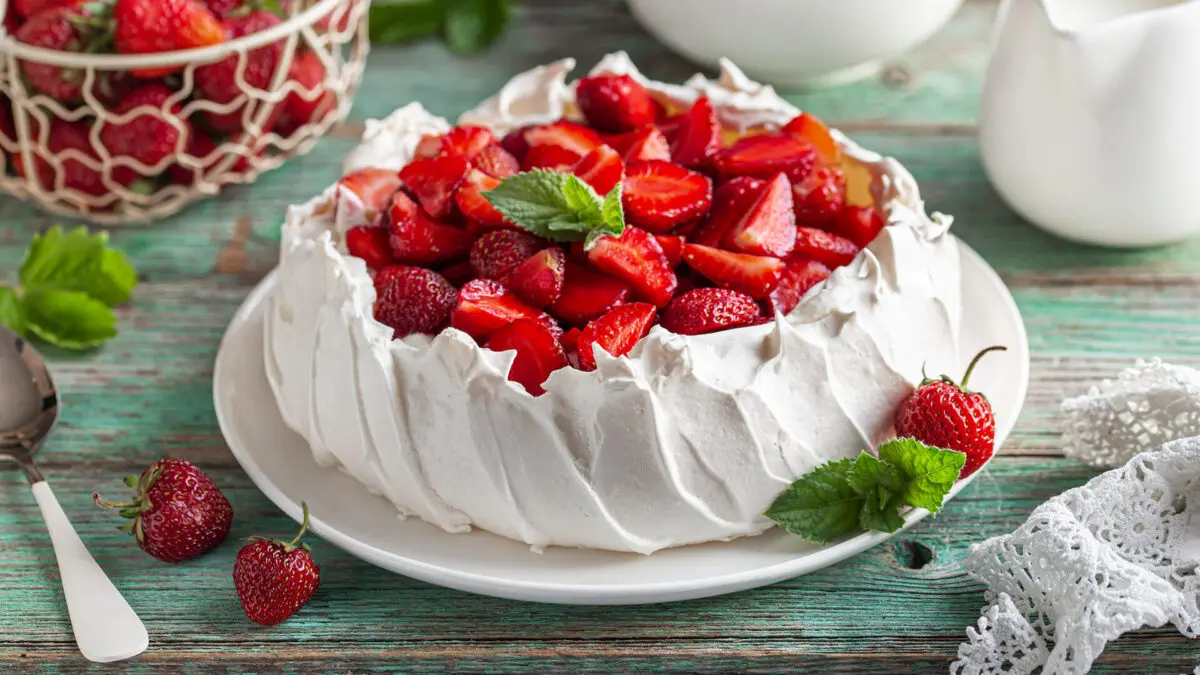
A pastry chef’s notes on borrowed meringue, a ballerina who never tasted it, and the argument neither country will let go..
There’s a particular sound a good pavlova shell makes when you tap it — a thin, dry crack, like the top of a crème brûlée, before you get to the marshmallow underneath. I’ve made hundreds of them. I still stop and listen for it every time. It’s the sound of a dessert that shouldn’t really work — sugar and egg white, whipped into something that’s basically edible air — holding its shape anyway.
What most people don’t know, tapping that shell at a Christmas table, is that they’re holding one side of a hundred-year argument.
The meringue was never the point
Meringue itself is old — properly old. The base technique, whipped egg white and sugar baked low and slow, traces back to Austria under the Habsburgs in the late 1700s, when sugar was still expensive enough that a dessert made mostly of air was, ironically, a flex. German immigrants carried versions of it to Australia and New Zealand through the 1800s, long before anyone had thought to name it after a dancer.
So the shell isn’t the invention. The shell was already here. What happened next is where it gets interesting.
Enter the ballerina
In 1926, the Russian ballerina Anna Pavlova toured Australia and New Zealand, and by every account it was less a ballet tour than a cultural event. Ten thousand people reportedly turned out to greet her in Sydney. She danced her way through Melbourne, Brisbane and Adelaide, and for a while it felt like everything — perfume, hats, chocolates — wanted her name on it. A dessert light enough to seem like it might float was an obvious candidate. Nobody agrees on exactly who made the leap first, but “pavlova” stuck to a meringue cake because it was supposed to look the way she danced: light, precise, barely touching the ground.
New Zealand’s paper trail
This is where the actual research starts, and it’s more interesting than either country’s usual talking points. Food historian Dr Helen Leach, of the University of Otago, spent years tracing the dessert’s earliest written appearances for her 2008 book The Pavlova Story, and found three separate recipes called “pavlova” in New Zealand cookbooks before 1930 — the earliest in a 1927 Davis Gelatine company booklet, Davis Dainty Dishes. The catch: those early pavlovas weren’t the crisp-shelled cake we picture now. They were closer to jelly desserts and meringue-kiss sandwiches — related, but not quite it yet.
Australia’s version, and the one that stuck
The pavlova most of us actually make — that thick, marshmallow-centred meringue base, piled with cream and fruit — shows up in Australia in 1935, credited to Herbert Sachse, a chef of German heritage working at the Esplanade Hotel in Perth. Contemporary accounts describe it simply as “a thick sort of meringue cake.” It’s not flashy language, but it’s the first clear description of the pavlova as we know it.
So here’s the honest answer, as much as either country wants a cleaner one: New Zealand named it first. Australia built the version everyone now recognises and argues over. Both claims are true, which is exactly why the fight never resolves — and, if I’m being a pastry chef about it rather than a diplomat, exactly why it shouldn’t. A dessert worth naming a rivalry after is a dessert worth defending.
What the argument actually comes down to, in a kitchen
If you want to know which side of the border you’re standing on without checking a map, look at the pavlova on the table. Australian versions tend to be baked longer for a crisper, more definite shell, and topped with passionfruit. New Zealand versions lean softer and more marshmallowy all the way through, topped with kiwifruit. Neither is wrong. They’re just two countries slow-baking the same argument for ninety years.
For what it’s worth — and you can take this as a professional opinion, not a nationalist one — I bake mine the Australian way: low oven, long time, cornflour and a splash of vinegar folded in right at the end to hold that marshmallow centre while the outside sets hard enough to crack. I’ll walk through exactly how I get that shell, step by step, in the Pavlova Wreath recipe going up this Christmas. Consider this the history lesson before the homework.
Pastry is magic, and every now and then, it’s also a hundred-year argument that two countries still haven’t put down. I wouldn’t have it any other way.